
TPD Payout Tax in Australia: What You Keep, What You Lose, and What to Do Next
A TPD payout can be a lifeline, but the tax on TPD payout rules change fast once superannuation is involved.
A TPD payout should feel like relief, not another bloody puzzle. But if the money comes through superannuation, the amount you actually keep can look a lot different from the headline figure.
Why this matters
Here’s the thing: a lot of people hear “TPD payout” and assume it all lands tax-free. That’s true in some cases, but not all.
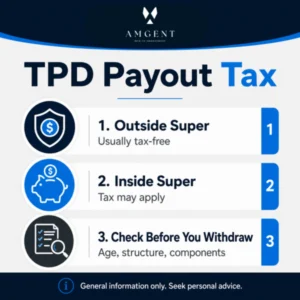
If the benefit is paid directly outside super, it is generally tax-free; if it’s paid through super, tax can apply depending on your age, the way you take the benefit, and how your super is split between taxable and tax-free components.
The simple rule
Total and Permanent Disability insurance pays a lump sum if illness or injury leaves you permanently unable to work. MoneySmart says TPD cover can sit inside super or outside super, and the cover definition can vary between “own occupation,” “any occupation,” or activities of daily living.
If your TPD policy is outside super, the payout is typically tax-free because it is not treated like income. If the benefit is paid into super, you may need to deal with tax when you withdraw it, especially if you’re under 60. Moneysmart TPD article here
Why superannuation changes everything
MoneySmart warns that a payout from TPD held inside super may be taxed at up to 22% if you’re under age 60. The ATO also explains that disability-related super benefits are taxed according to their components and the way the benefit is paid.
In plain English, the super fund doesn’t just hand you a neat, clean lump sum and call it a day. Instead, the fund looks at the taxable and tax-free parts of your super, plus your age and the form of benefit you take.
The tax-free uplift
This is the bit most people miss. When a disability super benefit qualifies, the super fund can apply a tax-free uplift, which increases the tax-free component and reduces the taxable part.
That can make a real difference to what lands in your pocket. A simple example helps: if a TPD benefit is paid through super and part of it qualifies for the uplift, the taxable portion may shrink materially, which lowers the tax payable when you withdraw the money. We designed a calculator to assist you here.
What people get wrong
People usually trip up in three places. First, they assume all TPD money is taxed the same way. Second, they rush to withdraw before checking the tax-free uplift and component split. Third, they forget that the decision to take a lump sum or income stream can change the outcome.
The bigger point is this: once the money is in super, the timing and structure of the withdrawal matter just as much as the claim itself.
What to do next
Before you move anything, get three things clear: your age, your super fund’s component breakdown, and whether the benefit qualifies for the disability uplift. Then check whether taking a lump sum, income stream, or leaving the funds in super creates the better result for your situation.
For example, if a reader has a mortgage, two kids, and a payout tied up in super, the wrong withdrawal choice could mean needless tax and less cash for the next 12 months. That’s not just a tax issue. That’s a life issue.
What this means for business owners
If you run a business, a TPD payout can affect more than just your personal cash flow. It may also affect debt, succession plans, working capital, and how quickly you can step back without putting pressure on the business.
That’s why it’s worth slowing down before you withdraw anything. A payout that looks straightforward on paper can become a lot more complicated once you factor in the business, your family, and the next stage of your life.
For business owners, the right question is not just “how much tax will I pay?” It’s also “what is the smartest way to use this money so I protect the family and keep the business on steady ground?”
Check out our article on insurance for business owners here.
Will a TPD payout affect Centrelink or child support?
This is one of the first questions many people ask after a claim is approved. The answer depends on where the money sits and whether you withdraw it.
If your TPD payout stays in super, it will generally not affect Centrelink straight away. But once money is withdrawn, Centrelink may assess it under the income and assets rules, depending on your circumstances.
Child support can also be affected, especially if you withdraw a taxable amount from super. In some cases, Services Australia may treat that withdrawal as income or consider it when reviewing your support assessment.
If you receive a TPD payout and you have Centrelink or child support in the background, it is worth checking the timing of any withdrawal before you act.
What AMGENT would say
This is where AMGENT’s angle is different. We don’t look at a TPD payout as a one-off event; we look at what it means for the rest of your plan.
That means thinking about cash flow, debt, family security, and whether the money should stay protected inside super for a while instead of being pulled out too quickly. If you’re dealing with a TPD benefit, the smart move is to slow down long enough to understand the structure first and this is where AMGENT Wealth approach differs from many financial adviser and wealth managers in Melbourne.
Why AMGENT is a good fit for this conversation
Ben Waite founded AMGENT after years of working across wealth management, superannuation, banking, audit, and consulting, including roles in Australia and the UK. That experience shaped AMGENT’s approach: clear advice, disciplined thinking, and a strong focus on stewardship rather than noise.
At AMGENT, we work best with families and business owners who want straight answers and a long-term partner. We help clients think beyond the payout itself and look at the bigger picture: protection, retirement, succession, and family wealth.
If that sounds like the kind of conversation you need, you’re in the right place. more of our services here.
Your next step
If you’ve just had a TPD claim approved, or you’re trying to work out what happens next, book a review before you withdraw a cent. The goal is simple: keep more of what’s yours and avoid turning a hard moment into a tax headache. Book an obligation free chat here.
Ben Waite
10 June 2026
This article is general information only and does not take into account your personal objectives, financial situation, or needs. Before acting, consider whether the information is appropriate for you and read the relevant product disclosure statement where applicable. For AMGENT’s privacy policy, visit amgentwealth.com.au/privacy-policy.