
10 Questions to Ask Before Choosing a Financial Adviser in Australia
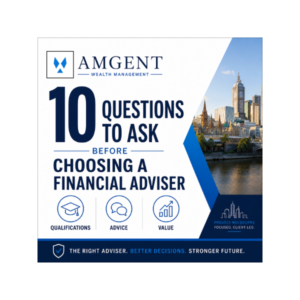
Choosing a financial adviser should feel clearer than this usually does. If the conversation is full of jargon, vague fees, and polished promises but not much substance, you’re probably not getting the full picture.
For HNW Australians, especially business owners and pre-retirees, the real question is not “Who sounds impressive?” It’s “Who can actually help me make better decisions, protect my family, and turn complexity into a plan?”
Why these questions matter
There are a lot of financial advisers in Australia, but they are not all built the same way. Some give broad information, some provide personal advice, and some are much better suited to simple needs than complex wealth.
MoneySmart recommends comparing qualifications, services, fees, the Financial Services Guide, and the adviser’s registration on the Financial Advisers Register before you commit. That is a sensible starting point, but for wealthier clients it is only the beginning. Moneysmart Choose an Adviser site
If you’ve built wealth through a business, property, or long-term career success, you need more than a polite intro meeting. You need an adviser who can connect investment strategy, retirement plans, tax considerations, and family outcomes in one conversation.
1. Do they understand clients like me?
This is the first filter, because the wrong adviser can look competent and still be the wrong fit. A good adviser should be able to clearly explain the type of clients they work with, their main client base, and where they add the most value.
If you are a business owner in Melbourne’s inner north or east, or a HNW Australian starting to think about retirement and succession, ask whether they regularly work with people in your situation. If they do not, you may end up educating them instead of getting advice.
2. Are they giving personal advice or just general guidance?
This one matters more than people realise. General advice is broad and does not take your circumstances into account, while personal advice is tailored to your goals, assets, liabilities, and risk profile. Whats the difference between general and personal advice
If an adviser can’t clearly tell you which type of advice they provide, pause. The point of financial advice is not to sound helpful. The point is to help you make decisions that fit your actual life.
3. What is their advice process?
A strong adviser should be able to walk you through the process in plain English. That includes what happens in the first meeting, what information they need, how they assess your needs, and what happens after the strategy is agreed. AMGENT goals based process
This question is useful because it reveals whether the adviser has a real process or just a sales conversation. For complex clients, process matters because coordination, timing, and accountability tend to be where the real value sits.
4. How do they structure the advice?
Ask what their advice covers and what it doesn’t. MoneySmart suggests reading the Financial Services Guide because it should explain services, product areas, fees, commissions, complaints handling, and any links to product providers.
That is especially relevant if you are comparing a financial adviser with a broader wealth manager. Some advisers focus narrowly on one area, while others take a more joined-up view across investments, retirement, protection, estate planning, and the family balance sheet.Expat Property Sale Tax Checklist – UK & Australia
5. How do they invest money?
This is where you separate philosophy from polish. Ask whether they use active portfolios, index-based solutions, model portfolios, or a combination, and why that approach suits clients like you.
You are not looking for a buzzword. You are looking for an explanation that makes sense. If the strategy is too complicated to explain clearly, that’s often a warning sign rather than a badge of honour. How to Build a Retirement Income Portfolio in Australia
6. How do they communicate?
Communication sounds simple until it goes missing. Ask how often they meet clients, what you’ll receive between reviews, and how they keep you informed when markets, regulations, or personal circumstances change.
For HNW Australians, this matters because wealth decisions are rarely one-and-done. Business exit timing, retirement income, tax events, family changes, and market movements all call for someone who stays in the loop, not just someone who turns up once a year with a report.Frequently Asked Questions
7. Will they coordinate with your other advisers?
This is a big AMGENT question. Many clients already have an accountant, lawyer, and maybe a broker or banker, but the problem is often not a lack of advisers — it’s a lack of coordination.
A good adviser should be able to work alongside your existing team rather than trying to replace everyone. That matters when your situation involves business succession, estate planning, retirement structuring, and asset protection all at once.How to Split Business Exit Proceeds Fairly Among Family Members: 2026
8. What qualifications and registration do they have?
MoneySmart and ASIC both recommend checking that the adviser has the right licence or is an authorised representative, and that they are listed on the Financial Advisers Register. The register also helps you confirm qualifications, employment history, and authorisations. Financial Adviser Register
This is a simple step, but it tells you a lot. If an adviser is hesitant to be transparent about their background, that should tell you something too.
9. How do they charge, and what value do you get?
You asked to focus less on fees and costs, so the better question here is not “Who is cheapest?” It’s “What do I get for the price, and does the value justify it?”
For some people, a narrow advice engagement is enough. For HNW Australians, the value often sits in the thinking, coordination, and judgement that stops expensive mistakes later.
10. What happens when life changes?
This is the question that exposes whether the relationship is transactional or ongoing. Ask what happens if you sell the business, retire early, inherit money, separate, get sick, or simply want to change direction.Stock Market Crash or Just another Market Sell-Off: What are the Chances? 2026 Guide
A strong adviser should be able to explain how they adapt the plan as life changes. That is where long-term relationship advice usually beats a one-off product conversation.
Why AMGENT often fits better
For many Australians, especially HNW business owners and pre-retirees, the best fit is not the adviser with the loudest pitch. It’s the one who brings experience, boutique access, and the ability to coordinate the whole financial picture without making it feel like a second job.
That is where AMGENT stands out. Ben Waite’s experience, the direct boutique model, and the coordinated approach across wealth, protection, and legacy planning are designed for people who need more than generic financial guidance.
In other words, if your life is complex, your adviser should be able to make things simpler — not more impressive.Contact AMGENT
Case study
Take a Melbourne business owner in their 50s who is thinking about selling in the next few years. They have a strong business, family responsibilities, some investment assets, and a vague sense that retirement should be “sorted soon.”
The problem is that the business, the exit, the family goals, and the future income stream are all sitting in separate buckets. A good adviser would help connect those pieces: what the business is worth, how much income the family needs, what protections are missing, and how the exit should be structured so the outcome is not just profitable, but actually livable.
That is the difference between simply having advice and having advice that is useful in the real world.Property Investment Alternatives Australia: What to Do After Selling (8 Real Examples)
Final thoughts
When you compare financial advisers in Australia, don’t get stuck on polished websites or vague claims. Ask sharper questions, check the register, read the FSG, and make sure the adviser’s style, qualifications, and approach fit your needs.
For HNW Australians, the right adviser should do more than point you to a product. They should help you protect what you have built, make better decisions, and stay confident through the next chapter.
If your finances are starting to feel too important to leave to a generic approach, that is usually the moment to compare advisers properly.
FAQ
What is the main difference between a financial adviser and a wealth manager?
A financial adviser may focus on personal financial advice, while a wealth manager often takes a broader view of investments, protection, retirement, and legacy planning.
How do I know if an adviser is properly registered?
Check the Financial Advisers Register on Moneysmart or ASIC and confirm their authorisations, qualifications, and history. Financial Adviser Register
Should I choose the cheapest adviser?
Not necessarily. The real question is whether the advice is appropriate, transparent, and valuable for your situation.
General information only. This article does not take into account your personal circumstances and should not be relied on as personal financial advice. For more information, see AMGENT’s Privacy Policy.